Technology
/
feb 16, 2025
Rufus: Amazon's New AI That Transforms the Buying Journey. What It Truly Means for Brands
Rufus, the AI announced by Amazon on February 1, 2024, is set to revolutionize the shopping journey. Discover how it will impact brand sales and how to prepare for the new era of e-commerce.
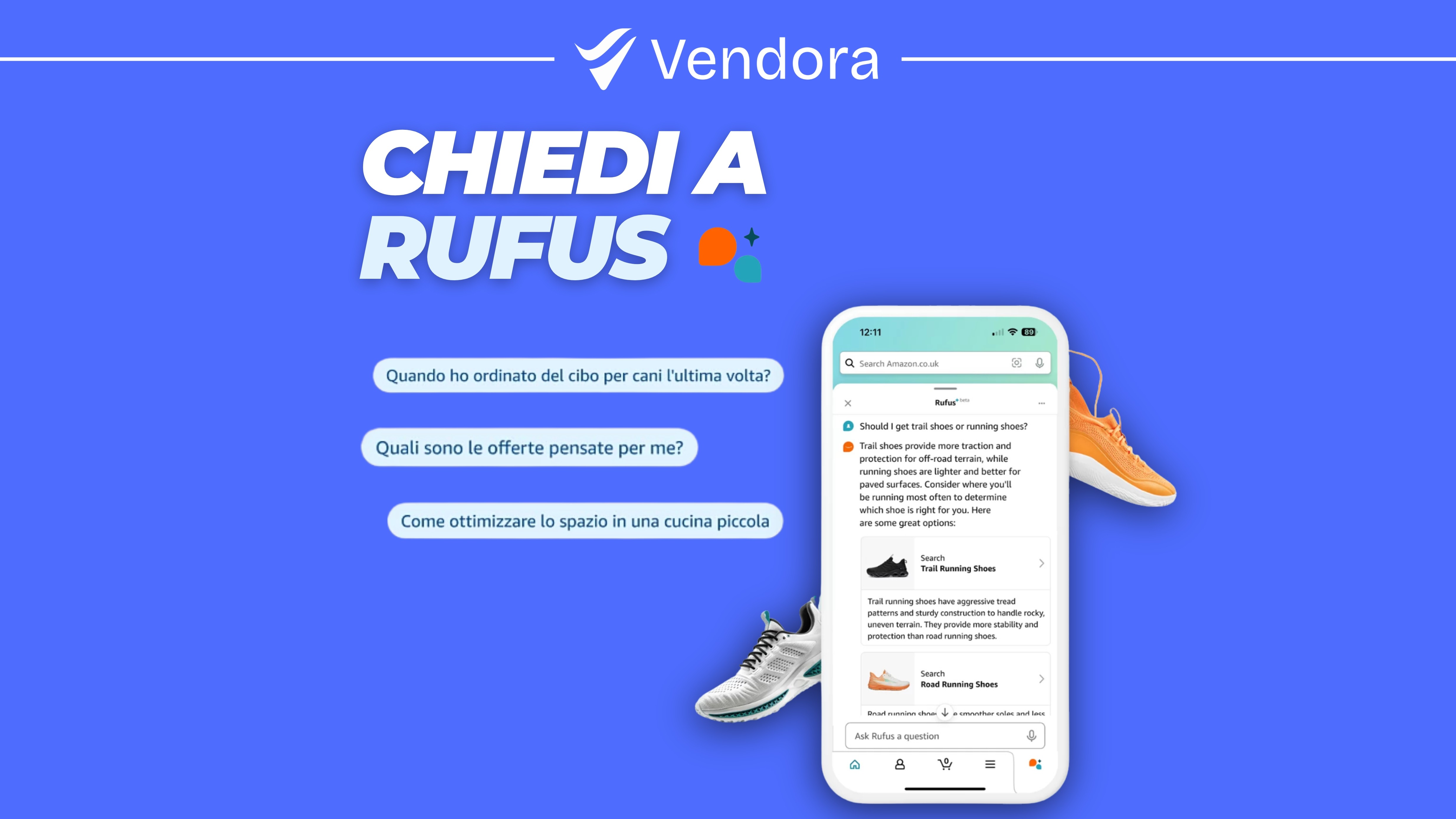
Rufus: Amazon's New AI Transforming the Buying Journey. What It Truly Means for Brands
In recent years, Amazon has introduced dozens of technological innovations, but few possess the transformative potential of Rufus, the new AI assistant designed to guide consumers in their purchasing decisions directly within the Amazon experience.
Rufus is not merely an advanced search engine: it's a conversational advisor integrated into the customer journey, capable of interpreting user preferences, intentions, and real contexts to generate highly personalized recommendations.
The inevitable question now is:
how will this change brand sales on Amazon?
And more importantly: how should one prepare?
This article analyzes the expected impact, new competitive dynamics, and strategic actions every company should undertake immediately.
What Rufus Is and How It Truly Works
Rufus is an internally developed generative AI system by Amazon, trained on:
billions of product performance data,
reviews and Q&A,
editorial content and technical sheets,
past user interactions (where permitted),
behavioral and navigation queries.
The result is an algorithm capable of answering complex questions like:
“What are the best proteins to increase lean mass?”
“What is the difference between biodegradable and traditional diapers?”
“Recommend an educational game for 5-year-olds.”
Rufus does not simply return a generic list of products:
it filters, interprets, contextualizes, and proposes.
It is, in fact, a new level of ranking.
How Rufus Will Impact Brand Sales
With the introduction of Rufus, the traditional SEO + Ads mix is no longer sufficient to “buy” or “climb” visibility.
Now, a third force comes into play: semantic relevance.
Here are the most significant impacts:
1. Content Quality Becomes a Critical Ranking Factor
Rufus reads:
titles
bullet points
descriptions
A+ Content
technical attributes
Q&A
reviews
Everything becomes part of the “semantic vector” that the AI uses to determine if your product is truly relevant to the user’s query.
Generic content = invisibility.
Structured + rich content = AI preference.
2. The Importance of Technical Attributes (Numerical, Measurable) Increases
AI favors objective data, not creative copy.
Attributes like:
dimensions, weight, materials
certifications
nutritional data
technical specifications
recommended age
environmental values
will become crucial to presenting a product as “the ideal choice.”
3. The Importance of Reviews Escalates Further
Rufus utilizes:
review sentiment
recurring topics
keywords
phrases indicating real benefits
to understand if a product is appreciated and why.
Specific, detailed, and natural reviews will have a greater impact than short or generic reviews.
4. Ad Campaigns Will Change Approach
Ads will continue to be fundamental, but they must:
generate qualified traffic
enhance “product understanding” within Amazon data
increase the base of real signals (CTR, conversions, retention)
Those who think of “buying ranking” without solid content → will be penalized.
What Brands Should Do to Prepare for Rufus
Companies cannot “intervene on Rufus,” but they can influence the signals Rufus uses.
Here are the recommended strategic actions.
1. Rewrite Content with an AI-Driven Focus
It is no longer traditional SEO.
It is a semantic SEO, built to interact with a linguistic model.
Key elements:
answer the whys, not just the whats in bullets
include conversational long-tail keywords
use natural language
include comparable information (sizes, numbers, quantities)
2. Strengthen the Technical Structure of the Catalog
Many brands underestimate attributes like:
ingredients
official certifications
materials
age range
nutritional values
product origin
But Rufus uses them to understand the product’s positioning.
Every missing attribute is a missed opportunity.
3. Enhance Review Quality, Not Just Quantity
Recommended actions:
targeted Vine strategies
optimized post-purchase follow-ups
content that stimulates “thematic” reviews
complete and thorough responses to Q&A
4. Reassess ADV Strategies with a “Signal-First” Logic
Campaign goals will not only be:
ROAS
ACOS
TACOS
but also:
increase relevance
increase qualified traffic
create strong signals for AI
consolidate search intention
5. Consider a Brand Store Redesign with Educational Content
Rufus rewards brands that can explain their value.
Having edu-content in the Brand Store will become a competitive advantage.
6. Utilize AMC to Analyze the New Post-Rufus Funnel
The customer journey will also change with the introduction of AI.
AMC becomes essential for:
measuring new intention paths
understanding the influence of conversational queries
optimizing upper-funnel campaigns
Conclusion: Rufus is Not a Threat. It’s an Accelerator for Prepared Brands.
Rufus inaugurates a new paradigm:
Amazon is no longer a search engine. It’s a recommendation engine.
Brands focusing on:
solid content
technical structure of the catalog
quality signals
strategic vision on ADV
multimodal assets (video, A+)
will have a tangible advantage over competitors.
Those who continue to operate with “old” logic will be progressively excluded from the AI ranking.
Do You Want to Prepare Your Brand for the Rufus Era?
Vendora is an Amazon Partner Agency (SPN, Ads, SP-API) and supports Seller and Vendor brands in building content, technical architectures, and data-driven strategies prepared for Amazon’s AIs.
Contact us to explore how we could assist your brand.
/
BLOG
Other insights

Opportunities
/
Nov 11, 2025
Amazon Reduces Fees for 2026: Impact, Risks, and Opportunities for Sellers and Vendors
Technology
/
Nov 18, 2025
Amazon Marketing Cloud (AMC): What It Is, How It Works, and Why It's Redefining Advertising on Amazon

Market
/
Oct 22, 2025